


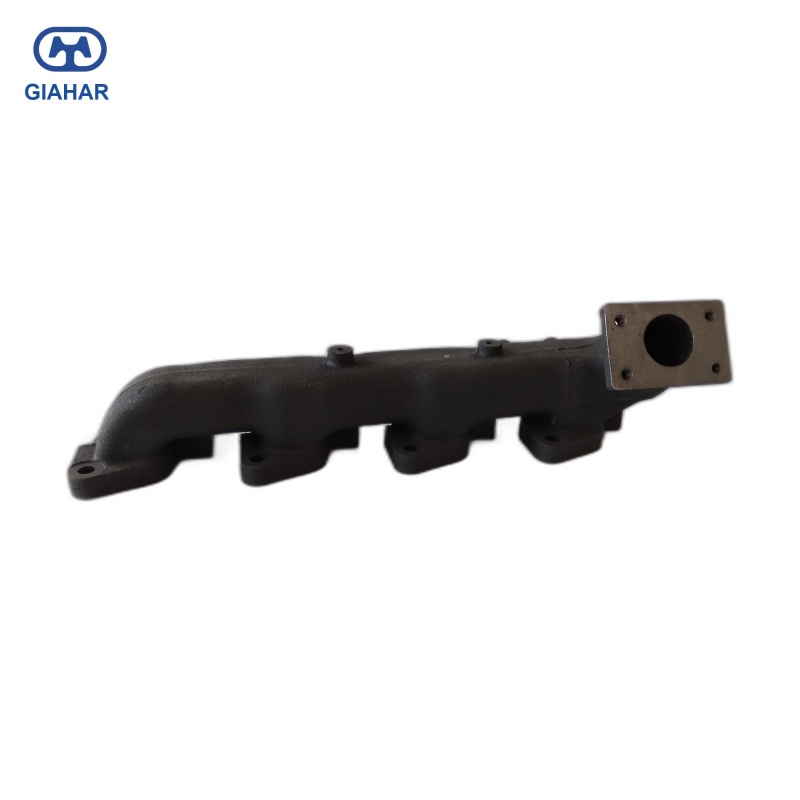
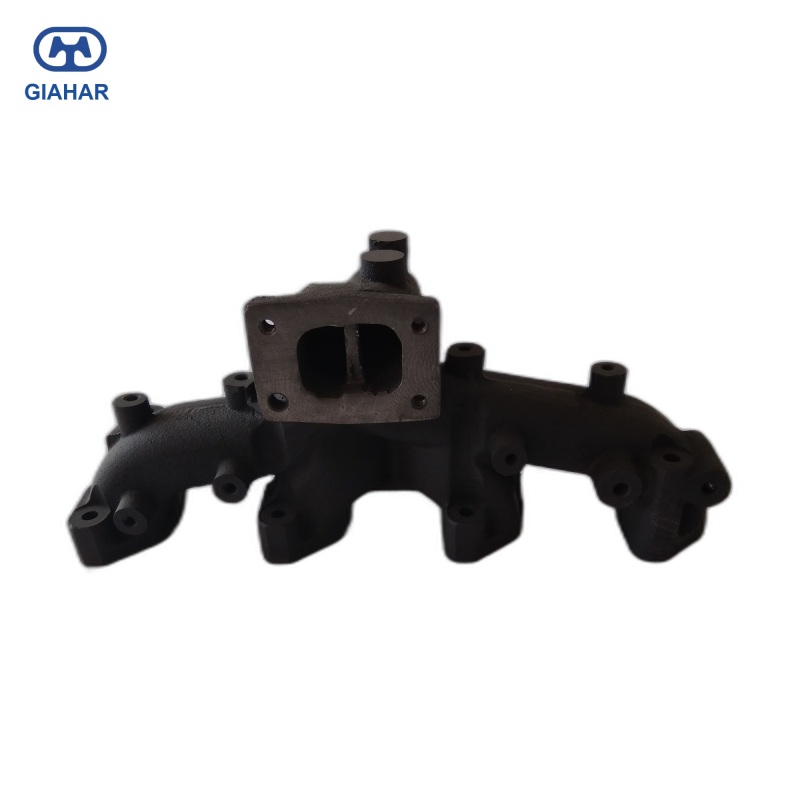
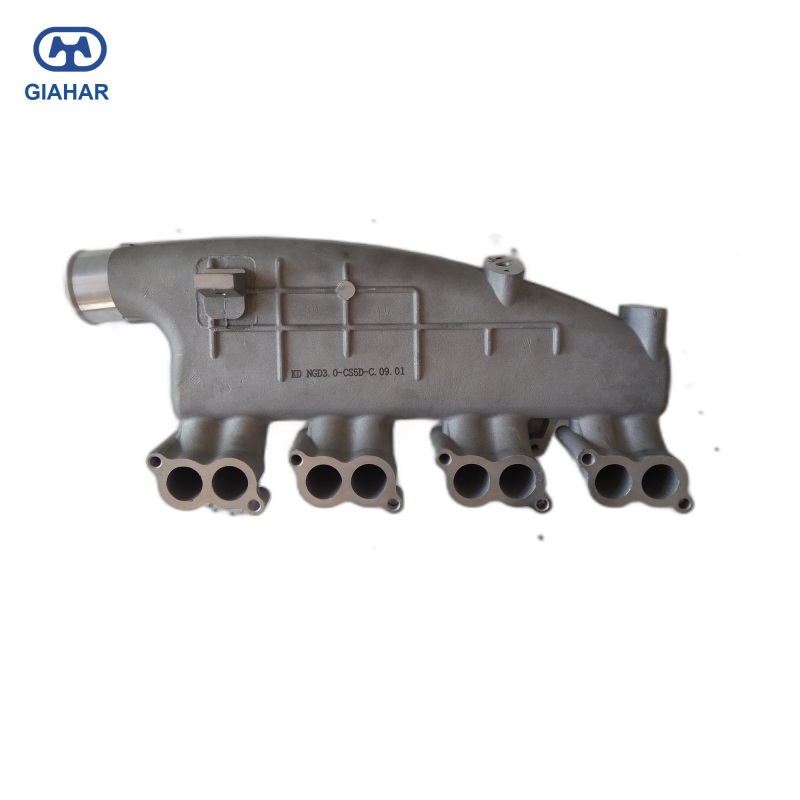
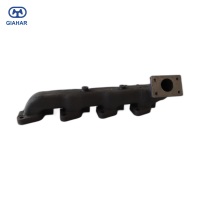
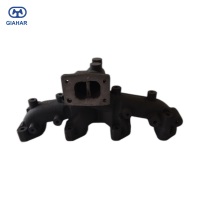
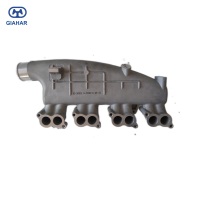
Exhaust Manifold Casting for Car and Truck Engines
• 304/316 and heat-resistant ductile iron exhaust manifolds
• Sand casting and silica sol investment casting
• Cast aluminum intake manifolds
• Flange flatness and heat-cycle validation
- Information
Exhaust Manifold Casting for Car and Truck Engines
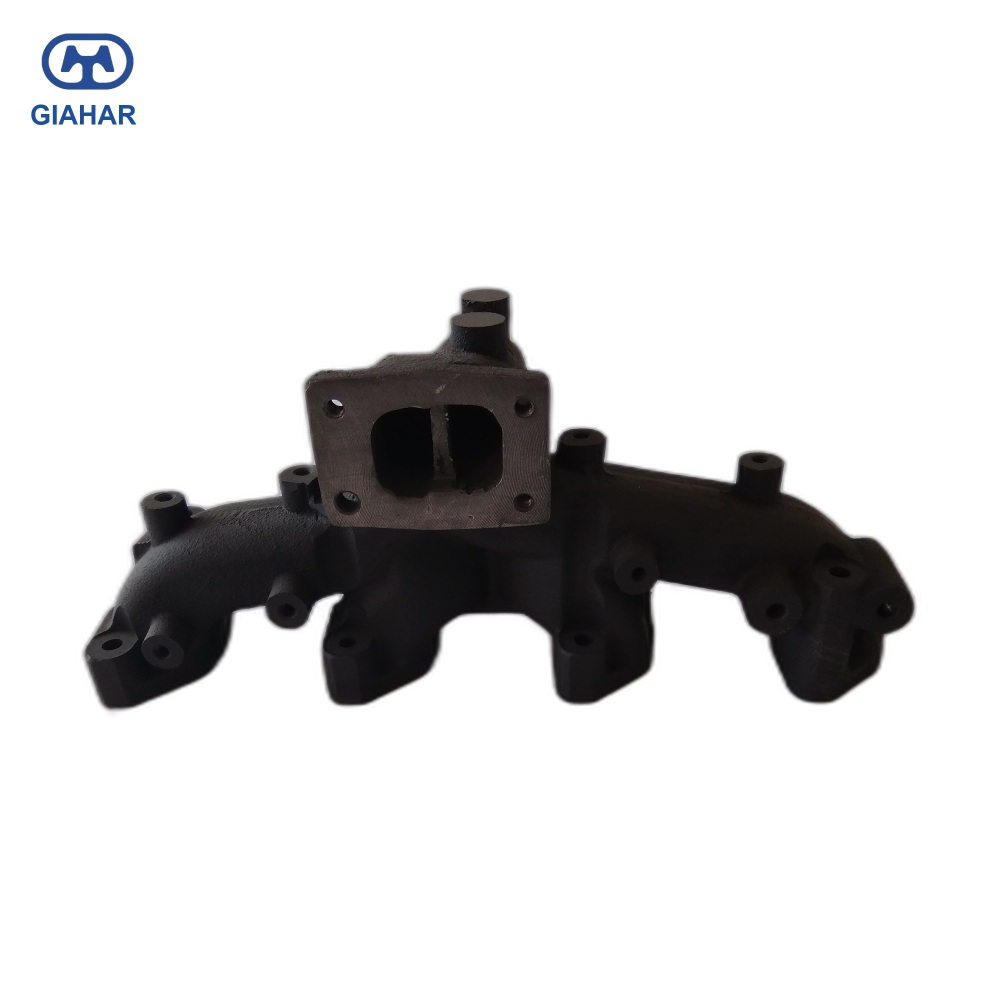
An exhaust manifold is not judged by one hot run. It is judged after the engine has been through repeated heating and cooling, with the flange still flat, the gasket still sealing and the ports still lined up. This product range covers ductile iron and aluminum manifolds for passenger cars, commercial trucks, heavy trucks and racing engines. The iron parts were sand cast or investment cast; the intake manifolds were aluminum cast. The rig target was agreed case by case. Racing and high-performance programs looked for 2,000 cycles or more, while passenger-car and commercial-vehicle work normally used 500 to 1,000 cycles as the validation threshold. We do not apply one cycle number to every engine, because the test profile and the joint design change the result.
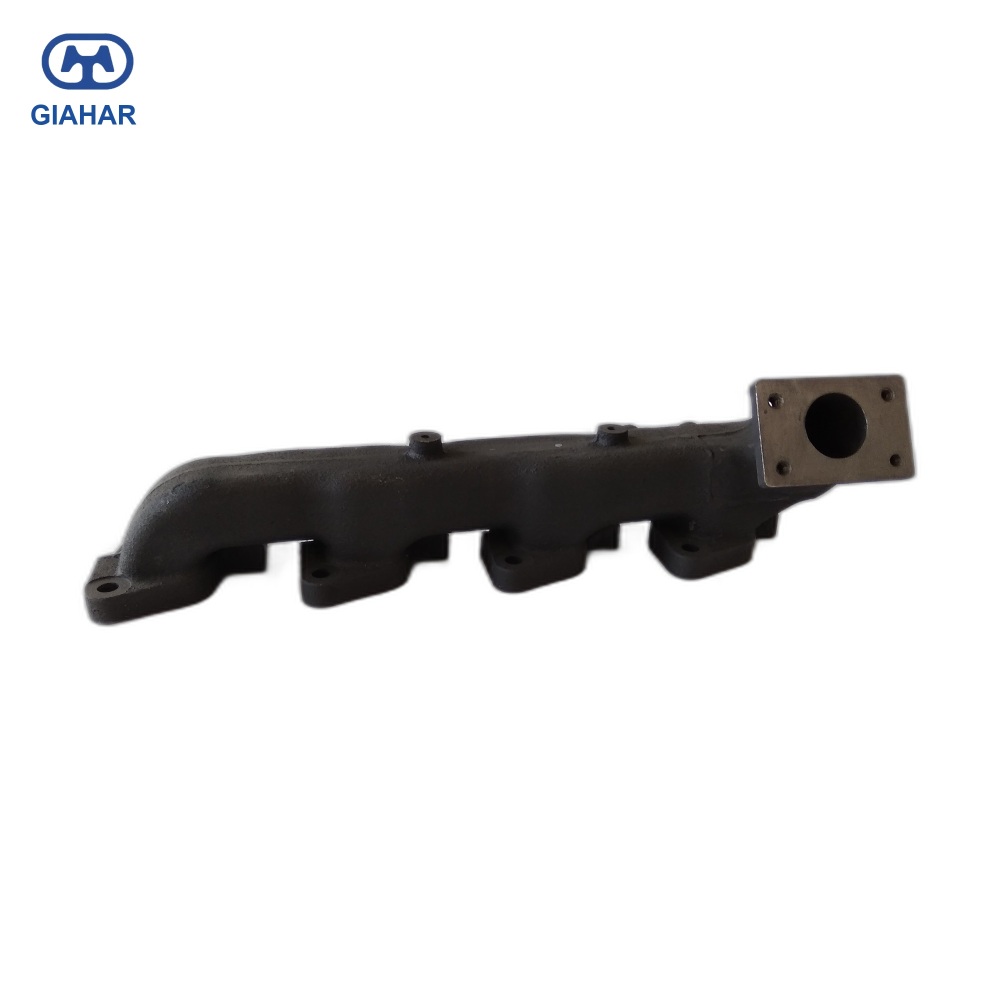
Product at a Glance
| Item | Project detail |
| Application | Passenger car, SUV, light truck, heavy truck, racing engine; exhaust manifold and intake manifold |
| Materials | QTRSi4Mo1, QTANi30Si5Cr5, QT600-3 ductile iron; ZL101A and ZL104 aluminum |
| Casting routes | Sand casting for high-temperature iron; investment casting for thin-wall and complex cores; aluminum casting for intake manifolds |
| Validation | Tensile and elongation, high-temperature tensile, thermal cycling, pressure/leak test, CMM dimensional report, spectrometer and metallography |
| Customer profile | A leading engine and commercial-vehicle manufacturer; customer name withheld for confidentiality |
The Engineering Challenge
At temperature the flange and the runner want to move by different amounts. If the wall is uneven, the flange can pull out of flat and the gasket will leak. If the iron is not controlled, scale forms and the section is lost. If the core shifts, the port pattern moves and the turbo or downpipe will not fit. We had to hold four things at once: chemistry for thermal fatigue and oxidation, a wall that stays stable, a flange face that remains flat after cycling, and a port pattern that repeats on the assembly line. The passenger-car and racing versions also carried a weight target, while the truck version put strength and service life first.
The project therefore had to control four things at once: chemistry for thermal fatigue and oxidation, a stable casting wall, a machined flange face that stays flat after heat cycles, and a repeatable port pattern for the assembly line. Weight was also a factor on the passenger-car and racing versions, while the truck version had to keep strength and service life.
Material Selection and Chemistry
The grade is chosen from the measured gas temperature and the drawing. SiMo iron covers the hottest exhaust manifolds. Austenitic Ni-resist iron is used where 850°C service and thermal shock are both present. QT600-3 is the diesel exhaust manifold grade. The aluminum grades are for intake manifolds, where weight and heat conduction matter more than exhaust-side strength.
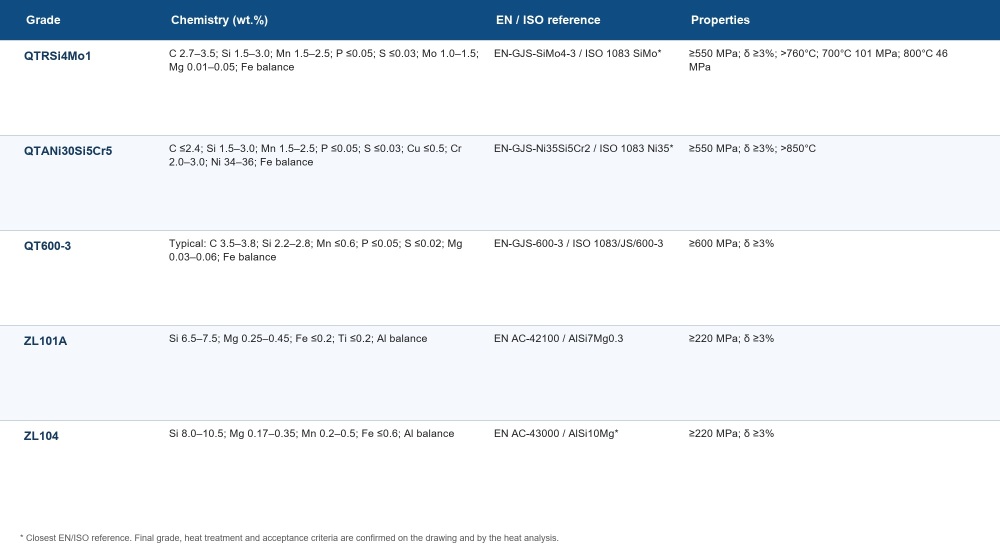
Grades outside this table are available. Heat-resistant ductile iron, Ni-resist and aluminum can be quoted from the drawing. Chemistry, heat treatment and mechanical properties are agreed heat by heat, and the heat analysis travels with the batch.
Casting Routes
Sand casting (resin-bonded sand) for high-temperature iron manifolds
Sand casting is used for the SiMo and Ni-resist exhaust manifolds. The pattern is designed with a controlled feeding system, and the sand core forms the internal runner. The casting is poured, shaken out, shot blasted and stress relieved before machining. The flange and port faces are then machined in one setup where possible, so the port pattern and the mounting face stay related.
Silica sol investment casting (lost-wax) for thin-wall and complex cores
For a thin-wall manifold, a racing prototype or a complex internal runner, the wax pattern and ceramic shell give a more precise as-cast shape. The investment route reduces machining stock on the runner and allows a smoother internal surface. It is used when the drawing calls for a compact package or a small batch that does not justify a sand pattern.
Aluminum casting (sand and gravity casting) for intake manifolds
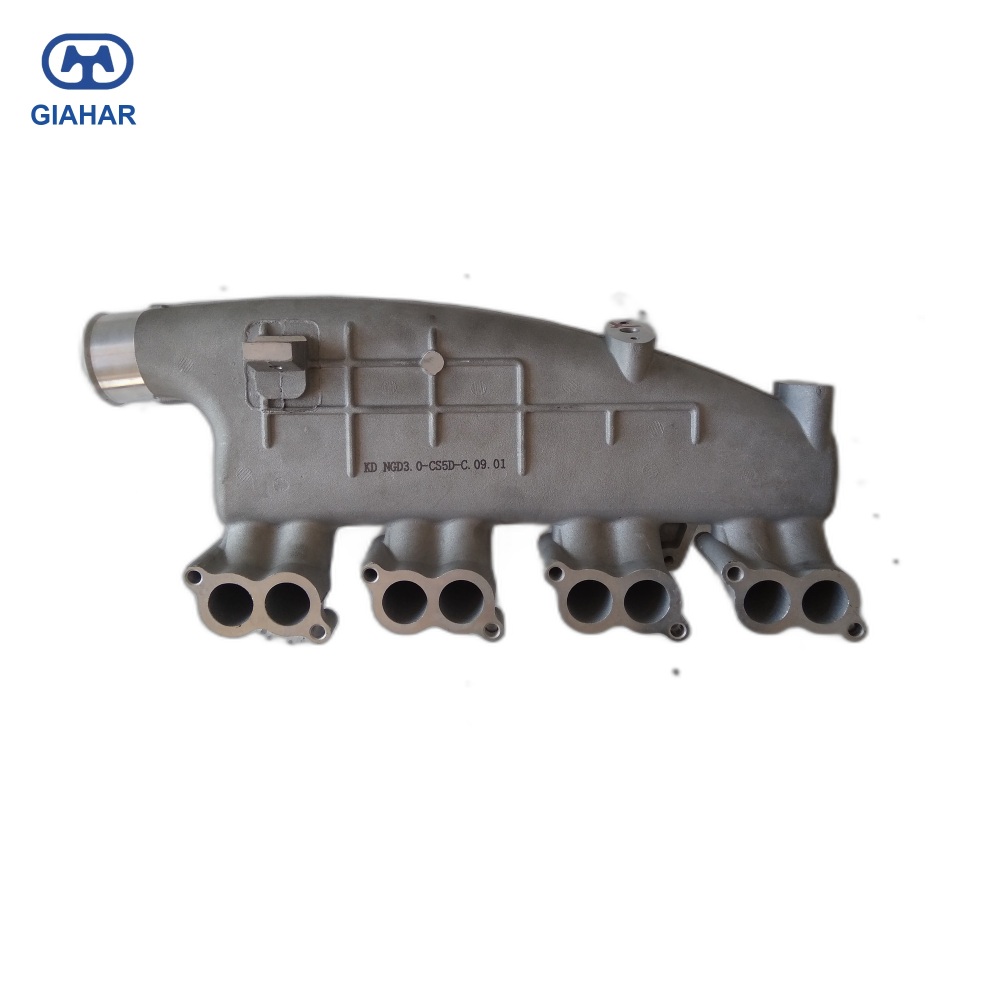
Aluminum is used on the intake side because it saves weight and conducts heat. It is not an exhaust-side material. We check the machined faces for porosity before assembly, and the throttle body face and runner ports are cut after casting.
Validation and Inspection
The project plan combines material, casting and machining checks. Each heat is checked by spectrometer. Tensile and elongation are tested to the grade requirement: ≥550 MPa and δ ≥3% for the two heat-resistant irons, ≥600 MPa and δ ≥3% for QT600-3, and ≥220 MPa and δ ≥3% for the aluminum grades. For the high-temperature irons, elevated-temperature tensile data is reviewed at 700°C and 800°C where the drawing requires it.
Flange flatness, port spacing, bolt holes and mounting faces are checked on a CMM or a surface plate. Where the drawing asks for a pressure or leak test, it is done before packing. Each batch carries a heat number, and the inspection record travels with the parts to dispatch.
How the Grade and Wall Section Were Chosen
Grade selection starts with the service temperature, not with the price list. The 760°C SiMo part and the 850°C Ni-resist part can share a drawing format, but they do not share the same casting behaviour. Ni-resist needs a different melt and tighter control of nickel and chromium, and it machines at a different rate. It is used only where the gas temperature and thermal shock justify it. For the diesel manifold, QT600-3 gives the strength and elongation without the nickel cost. On the aluminum intake side, ZL101A and ZL104 are selected by castability and wall section, not by a single tensile number.
Wall section and machining stock are reviewed together. A thick wall helps feeding but adds weight and can slow the heat cycle; a thin wall saves weight but makes core shift and chill cracks more likely. The pattern is adjusted with the foundry and the machine shop in the same review, so the casting arrives with enough stock on the faces that need it and not more. That is also why the flange and port faces are machined after stress relief rather than straight from the shakeout.
Sampling follows the same logic. The first article is checked for chemistry, tensile, flange flatness and port position before it goes to the customer. If the sample passes, the production pattern is released; if not, the change is made before the tool is cut. That order avoids the common problem of a sample that is hand-finished and a production part that is not.
How the First Article Is Checked
Before the pattern was cut, we reviewed the drawing, the gas temperature at the port and the turbo or downpipe interface. The wall section was checked against the casting route, and the faces that had to be machined were marked on the drawing. The first sample came from the trial heat. It was stress relieved, then machined on the flange and port faces.
The sample was not a display piece. It went on the fixture, the ports were compared with the drawing, and the flange was measured on a surface plate before and after a heat cycle. The turbo and downpipe were trial fitted at the same stage. If a stud or a port did not line up, the pattern was corrected before the production tool was released. The same check sheet now travels with the production batch.
For a new quotation we need the drawing, the expected gas temperature, the turbo or downpipe interface, the annual volume and the inspection standard. With those five items we can confirm the grade, the casting route and the machined faces without guessing. If the customer already has a failed manifold, the crack position and the service hours help us decide whether the problem is chemistry, wall section or flange stiffness.
Why This Product Matters
One team handles casting, heat treatment and machining, so the sample and the production batch follow the same route. That takes time out of the launch and keeps responsibility in one place.
Company Profile & FAQ
| At a Glance | |||
| Founded | 2010 | ||
| Factory Area | About 60,000 m² in Kazuo County, Liaoning | ||
| Staff | Around 120 people, including engineers and QC | ||
| Experience | 16 years of silica sol investment casting | ||
| Export Markets | Japan, South Korea, Europe and North America | ||
| Capacity | 1,000 tons per year of precision castings | ||
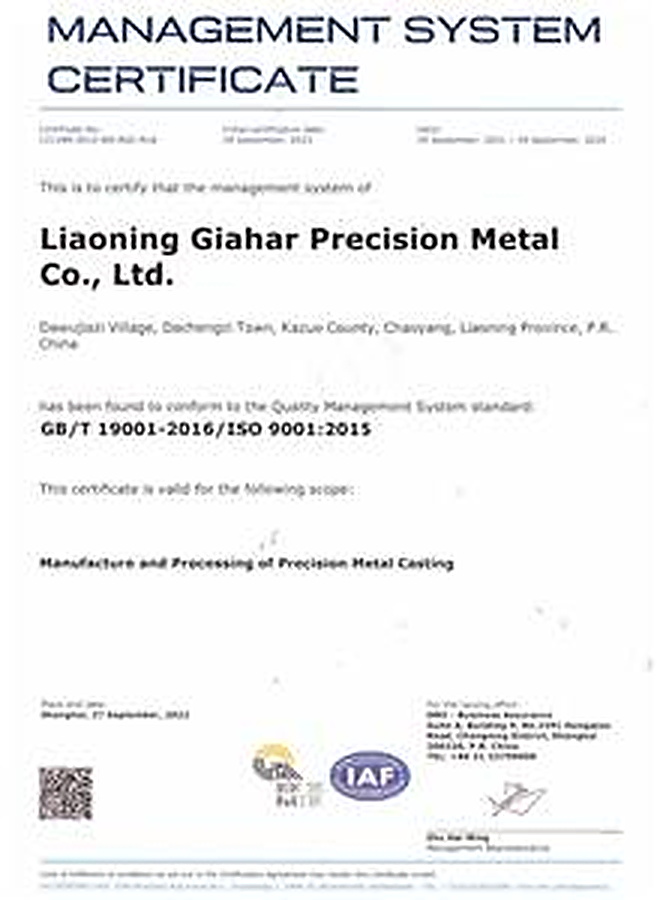
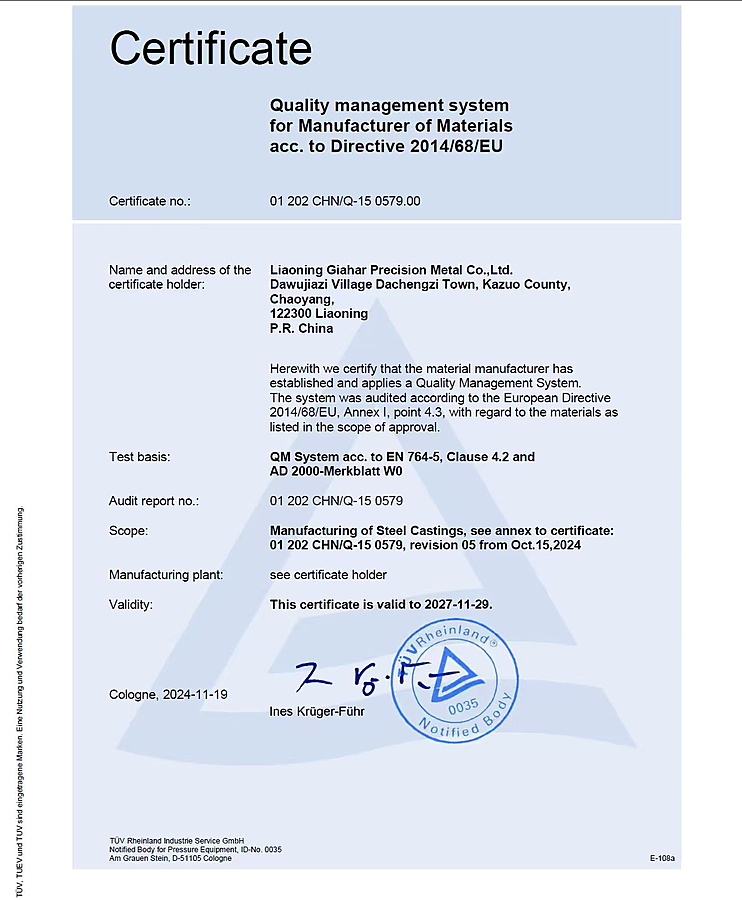
| Certifications | DNV ISO 9001 Quality Management System Certificate; TUV PED 2014/68/EU Pressure Equipment Certificate
| ||
| FAQ | |||
| Q: Can you produce parts from my drawing or sample? | |||
| Yes. Send a 2D drawing, a 3D model or a physical sample. Our engineer will review the wall sections, tolerances and machining stock before quoting. Any risk is raised before the sample stage. | |||
| Q: Do you provide material certificates and inspection reports? | |||
| Mill certificates to EN 10204 3.1, heat treatment records and dimensional reports can be supplied. PED 2014/68/EU documentation and a hazardous-substance-free declaration covering RoHS and REACH are also available. The required document package is confirmed at quotation. | |||
| Q: Can you do machining, heat treatment and surface finishing in-house? | |||
| Yes. Castings move from our foundry to our CNC shop. Stress relief is carried out after casting, and solution annealing can be done in our controlled furnace when the material specification calls for it. Passivation and pickling are also handled on site. Because the same team controls casting, heat treatment and finishing, the parts do not travel between vendors. That reduces handling damage and keeps the route short. | |||
| Q: Which standards do you work to? | |||
| European work generally follows ISO. Customer-specific standards are reviewed against the drawing, and the inspection standard is confirmed before the order is released. | |||
| Q: What are the MOQ and lead times? | |||
| MOQ is normally 100–500 pcs for new tooling, with lower quantities for repeat orders. New product development takes about 2 months, and precision casting production takes about 1.5 months. The final schedule is confirmed against the drawing, order quantity and current production load. | |||
What This Means for Your Program
If you are developing a new exhaust manifold, the fastest route is to send the drawing, the expected gas temperature and the turbo or downpipe interface. We will confirm the material, the casting route and the critical machined faces before quoting. If you already have a casting that cracks or leaks, send the failed part and the service condition; the material and wall section can be reviewed against the failure.
Exhaust Manifold FAQ
| Questions about this product | |
| Which material is used for a 760°C or 850°C exhaust manifold? | |
| The 760°C parts normally use QTRSi4Mo1 (SiMo ductile iron). For 850°C service with thermal shock, QTANi30Si5Cr5 (Ni-resist austenitic ductile iron) is used. QT600-3 covers the diesel manifold. The final grade is confirmed on the drawing and by the service data. | |
| Can the manifold be supplied as sand casting and investment casting? | |
| Yes. Sand casting is the normal route for the SiMo and Ni-resist exhaust manifolds. Silica sol investment casting is used for thin-wall, complex-core or prototype parts. The route is selected from the drawing and the order quantity. | |
| How is flange flatness checked? | |
| The flange and port faces are machined after stress relief. Flatness, port spacing and bolt holes are checked on a CMM or surface plate. A pressure or leak test is added when the drawing requires it. | |
| Do you supply the heat analysis and mechanical report? | |
| Yes. Each heat is checked by spectrometer, and the tensile and elongation results are recorded against the grade. The heat number follows the parts to packing. |