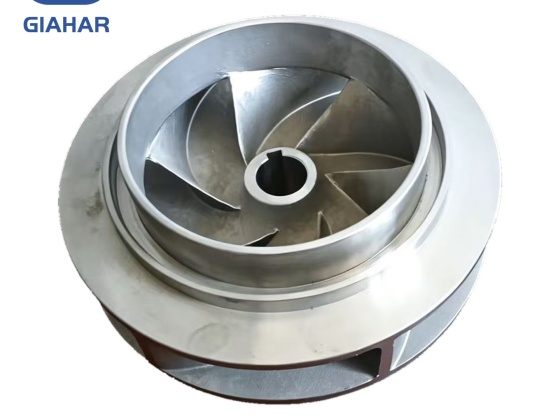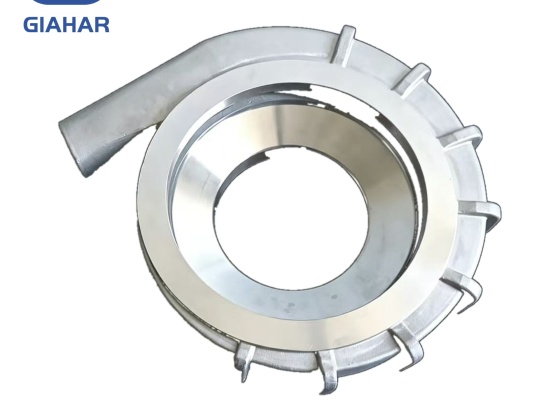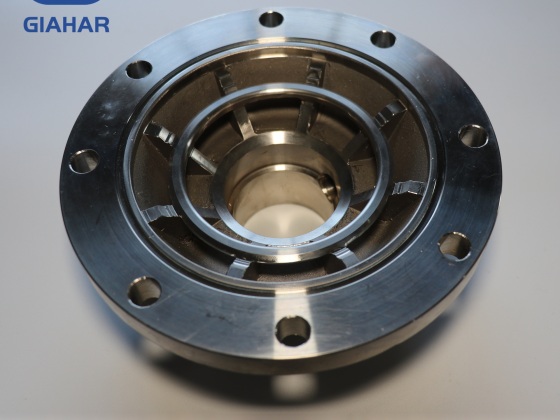


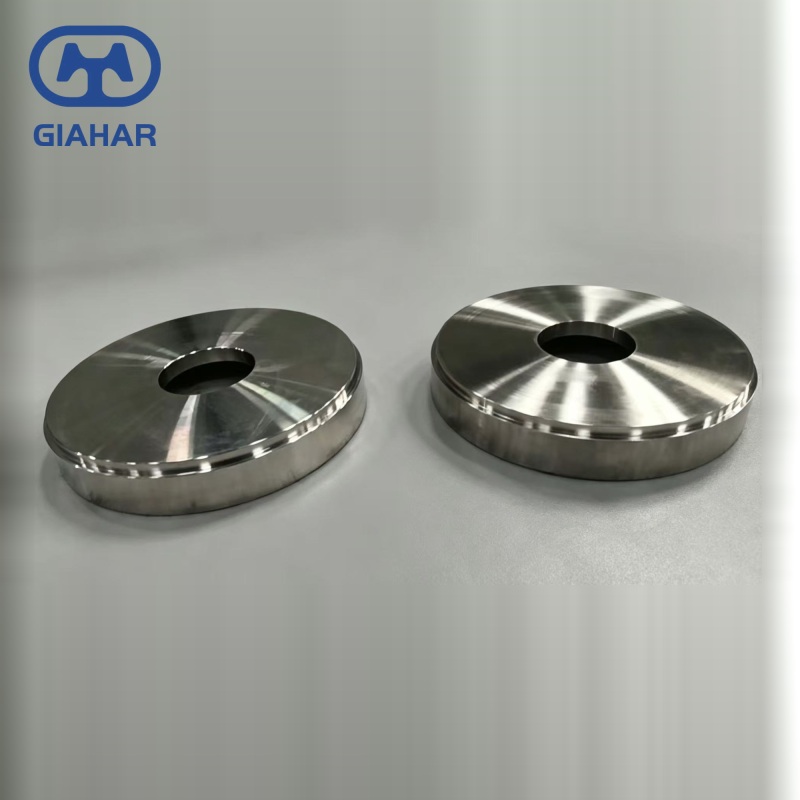
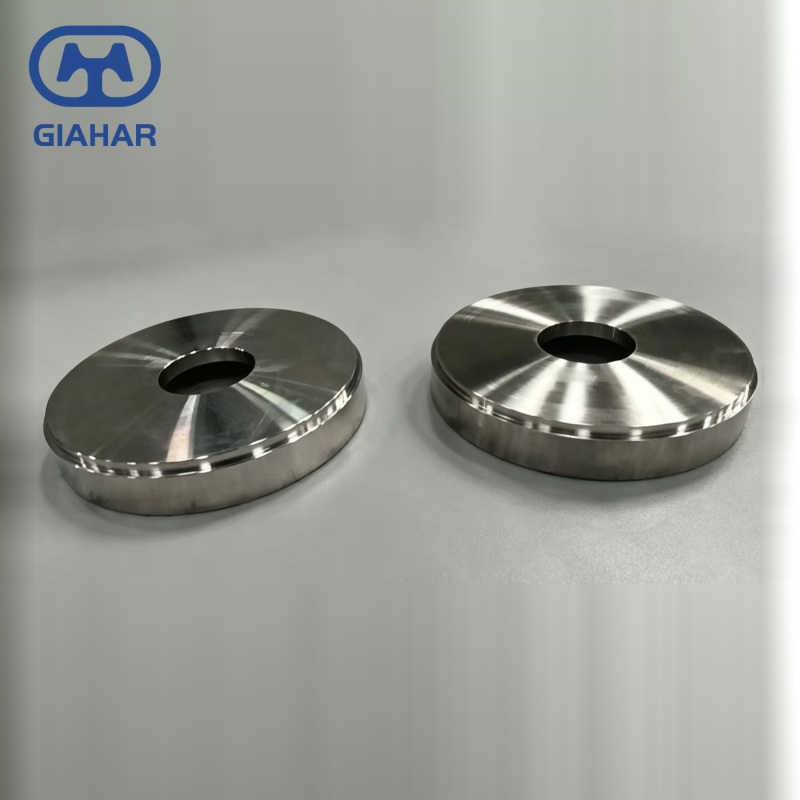
Pump protection plate 904L 300 mm
• 904L pump protection plate, 300 mm standard
• Custom 100–600 mm sizes
• Silica sol investment casting with CNC sealing face and register bore
• Bare as-cast with machined face, no coating
- China
- New product development: 2 months; precision casting production: 1.5 months; schedule can be adjusted according to production conditions.
- 1,000 tons per year (precision casting)
- Information
904L Pump Protection Plate 300 mm
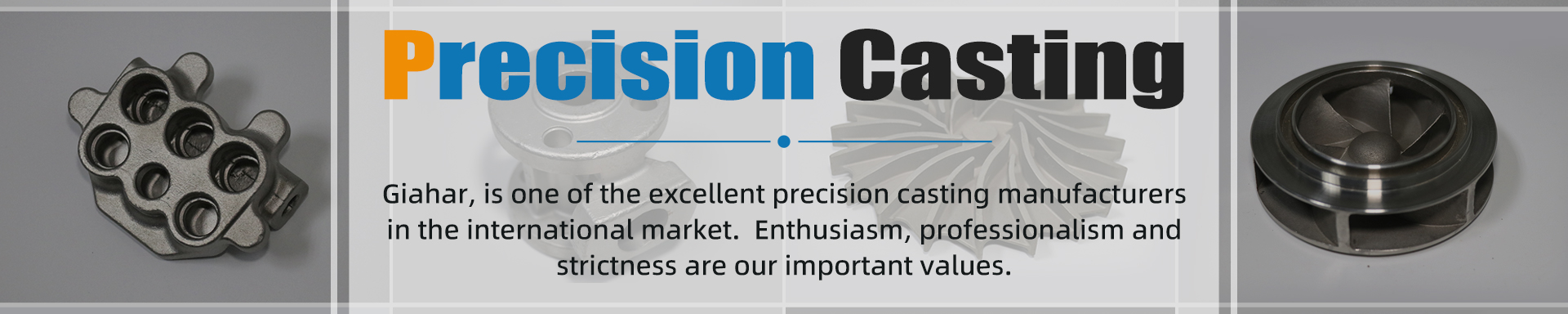
A pump protection plate sits right behind the impeller, between the rotating eye and the casing back wall. It takes the erosion and impact that would otherwise wear through the expensive volute casting. We investment cast these in 904L on our silica sol line and finish the sealing faces on our own CNC machining stations. You get the machined plate direct from our foundry, no trader standing between the casting floor and your receiving dock. Buyers running chloride-rich chemical or seawater service spec this over a 316L plate. A 316 wear face pits out inside a season and pulls the whole pump off line early.
The table below gives the normal working range for this protection plate. Final OD, bore, bolt pattern and flatness are confirmed from the drawing.
| Material | 904L Stainless Steel (UNS N08904) |
| Process | Investment Casting + CNC Machining |
| Size | 300 mm (Custom 100-600 mm available) |
| Application | Centrifugal pumps, Diaphragm pumps, Progressing cavity pumps |
| Surface Finish | Bare as-cast + machined sealing face |
| Finish and packing | Finish: As-cast, machined, passivated or pickled. Packaging: Anti-rust fluid on machined surfaces, with extra protection for machined faces and impact protection to prevent transit damage. Export carton, fumigated wooden crate, non-fumigated wooden crate, EU-standard box or pallet. Packaging can be customized to customer requirements. Environmental compliance: Our product packaging complies with Regulation (EU) 2025/40 on Packaging and Packaging Waste (PPWR), which applies directly in EU member states from 12 August 2026. |
What This Plate Does Behind The Impeller
The impeller spins and throws fluid outward against the casing wall. That stream carries grit, entrained gas and whatever fines slipped past the suction strainer. Without a wear plate, the flow erodes the casing directly. Once the wall thins, the casing weeps and the pump has to come apart on the skid. This 300 mm plate bolts flat against the casing back, right where the impeller eye sweeps. The expensive casting behind it stays untouched. The plate itself is the part that wears, and it is a cheap spare to carry on the shelf. Pull the pump, unbolt the old plate, bolt a new one in. You do not rebuild the volute. We hold the sealing face flat enough that the diaphragm or mechanical seal does not pick up an uneven load across its diameter.
Why 904L Instead Of 316
Some buyers ask why we do not just run a 316L wear plate. You can do that for freshwater, closed-loop cooling and routine washdown, because that service is easy. Once chloride shows up in the stream, however, 316 starts showing pits on the face within a season, and the crevice right under the bolt head opens up first. A 904L plate runs the same duty and stays flat, with no pitting and no lifting. You pull it after a shutdown, and the face is still there to be checked.
How The Cast Runs Through Our Shop
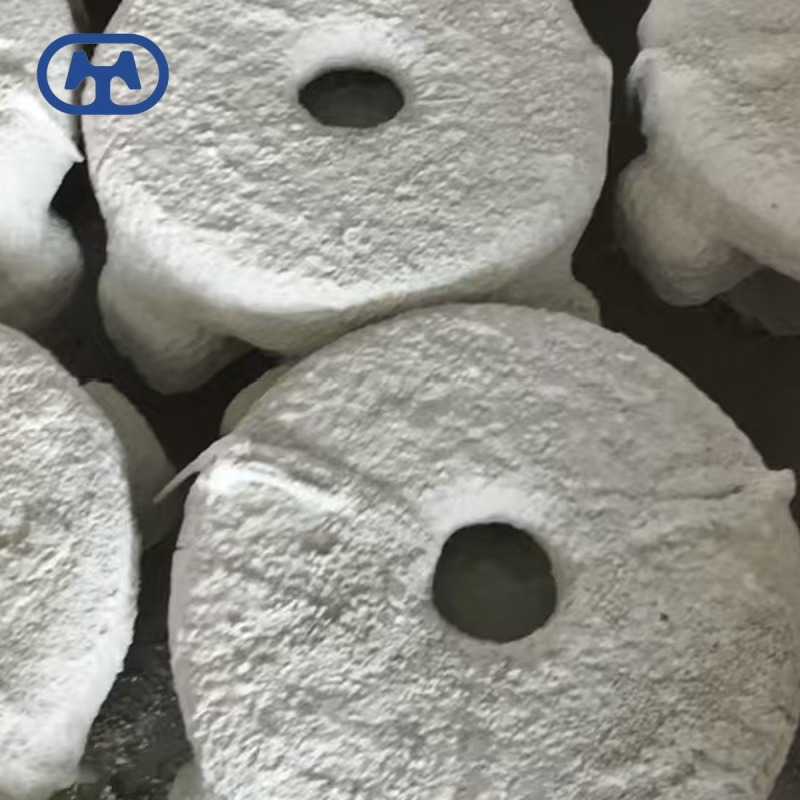
Send us your drawing and the machining requirement. We build the wax pattern on a die, set it on a runner, dip the whole tree in ceramic slurry and stucco it coat after coat until the shell feels thick enough. It sits overnight to dry. Steam autoclave strips the wax out. The shell fires in the furnace, and we pour the 904L stainless while it is still hot. Shakeout knocks the shell off. Shot blast cleans the ceramic off the as-cast skin. The rough plate goes through stress relief before it ever touches a machine table, so the flat face does not twist while we cut it.
On The CNC Table
In the machining bay, the operator faces the sealing surface flat to the tolerance required on your drawing, and the bolt holes are drilled straight through. The register bore is cut to match the impeller diameter. After the fixture is taken off, a dial indicator is used to swing around the face; if it is out of flat, the plate goes right back on the machine, because there is no arguing with the needle. A small chamfer is left around the OD, so the plate drops into the casing register without forcing.
Before It Leaves The Shop
Every plate gets a visual and a dimensional check after machining against your drawing before packing. We measure the flat face on a surface plate, check the bore, count the bolt holes. Pass it, we wipe the surfaces, tag the heat number, wrap it for freight. The surface is bare as-cast plus machined face. No paint, no coating. 904L does not need one. Send us the drawing with your required flatness and bolt pattern. We quote casting plus machining together, one lead time, one heat number per batch. 300 mm is the size on this listing, but we cast plate diameters from 100 mm up to 600 mm for diaphragm pumps, centrifugal pumps and progressing cavity units.
Measuring a Replacement Plate
Before a replacement protection plate is quoted, four dimensions need to be checked: the outside diameter, the register bore, the bolt circle and the face flatness. Counting the bolt holes alone is not enough, because two plates can share the same bolt pattern and still differ at the register. If the old plate is worn, measure the register land and the remaining face thickness, not only the OD. A photo of the plate sitting in the casing also helps to confirm which side faces the impeller. These details are reviewed with the casting and machining route before the pattern is made.
Custom Manufacturing Process
1. Requirement Communication
At the start, we look at the drawing, the application and the order quantity. The material, dimensions, tolerances, working conditions and any packing or document requirement are written down before the quotation is prepared.
2. Technical Evaluation
The engineering team reviews wall sections, machining stock, casting feasibility and the critical fits. If a feature is difficult to cast or machine, it is raised before tooling begins.
3. Process and Sample Confirmation
The process route is fixed, and a sample is made when the project requires one. The sample is checked against the drawing and confirmed before the mass production.
4. Mass Production
The production is arranged against the specification that has been confirmed and the quantity of the order. The progress is followed through casting, machining and finishing, and the quality control runs during the whole process.
5. Quality Inspection
Dimensional and visual checks are made according to the requirements which have been agreed. The inspection records are kept together with the batch.
6. Packaging and Delivery
The finished parts are packed for export, labelled as agreed, and prepared for the shipment together with the required documents.
The 904L wear plate is supplied as a pump wear plate, and the pump back plate is packed with it.
Company Profile & FAQ
| At a Glance | |||
| Founded | 2010 | ||
| Factory Area | About 60,000 m² in Kazuo County, Liaoning | ||
| Staff | Around 120 people, including engineers and QC | ||
| Experience | 16 years of silica sol investment casting | ||
| Export Markets | Japan, South Korea, Europe and North America | ||
| Capacity | 1,000 tons per year of precision castings | ||
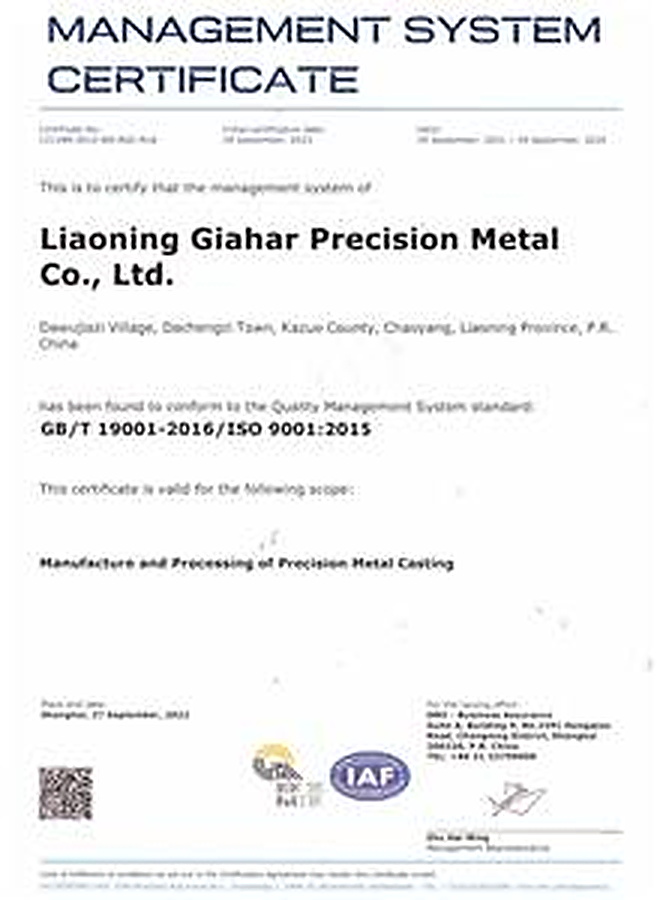
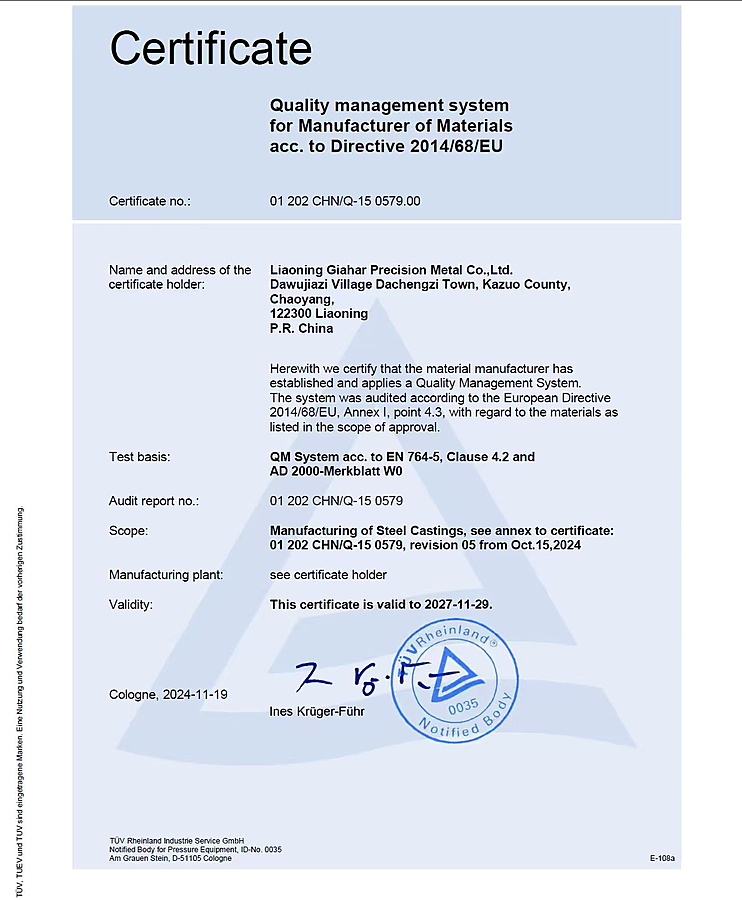
| Certifications | DNV ISO 9001 Quality Management System Certificate; TUV PED 2014/68/EU Pressure Equipment Certificate
| ||
| FAQ | |||
| Q: Can you produce parts from my drawing or sample? | |||
| Yes. Send a 2D drawing, a 3D model or a physical sample. Our engineer will review the wall sections, tolerances and machining stock before quoting. Any risk is raised before the sample stage. | |||
| Q: Do you provide material certificates and inspection reports? | |||
| We can provide mill certificates to EN 10204 3.1, heat treatment records and dimensional reports. If PED 2014/68/EU documentation is required, it can be prepared, and a declaration covering RoHS and REACH can be supplied. The document package is agreed at the quotation. | |||
| Q: Can you do machining, heat treatment and surface finishing in-house? | |||
| Yes. The castings are moved from our foundry to our CNC shop. Stress relief is carried out after the casting, and solution annealing can be done in our controlled furnace when the material specification requires it. Passivation and pickling are also handled on site. Since the same team controls casting, heat treatment and finishing, the parts do not have to travel between different vendors, which reduces the handling damage and keeps the production route short. | |||
| Q: Which standards do you work to? | |||
| For European work, ISO is normally followed. If the drawing calls for a customer-specific standard, it is reviewed against the drawing, and the inspection standard is confirmed before the order is released. | |||
| Q: What are the MOQ and lead times? | |||
| MOQ is normally 100–500 pcs for new tooling, with lower quantities for repeat orders. New product development takes about 2 months, and precision casting production takes about 1.5 months. The final schedule is confirmed against the drawing, order quantity and current production load. | |||
Protection Plate FAQ
| Product-Specific FAQ | |
| Q: Why use 904L instead of 316L? | |
| 904L is selected for chloride and aggressive service where 316L would pit. It keeps the sealing face flat and resists crevice attack under the bolt heads. | |
| Q: What sizes can you cast? | |
| The standard plate is 300 mm. Custom sizes from 100 mm to 600 mm are reviewed against the drawing and pump model. | |
| Q: How flat is the sealing face? | |
| The face is machined to the flatness on the drawing and checked on a surface plate. The register bore and bolt holes are checked at the same time. | |
| Q: Can you copy an existing plate? | |
| Yes. Send a sample or a 3D scan. We check the OD, register bore, bolt pattern and face flatness before quoting. |